A K-pop group trains for five years. Every song is finished, every move rehearsed — and then the debut gets pushed back. Not because of the vocals. Not because of the choreography. Because a fortune teller said the chosen date brings bad luck. It sounds like fan fiction, but this kind of story circulates relentlessly among former agency employees and Korean entertainment journalists — and it suddenly looks a lot less crazy when BLACKPINK's Lisa admits on camera, hooked to a lie detector, that she still visits fortune tellers to this day. Welcome to the occult side of K-pop: saju readings, red string bracelets, black onyx rings — and girl groups whose entire universe is built on curses. Let's separate the documented facts from the rumors, story by story.
What is saju — and why corporate Korea takes it seriously
First, the foundation: saju (사주), literally "four pillars," is a centuries-old Korean fortune-telling system that reads a person's destiny from the exact moment of their birth — the year, month, day and hour. It's not a fringe practice. Saju consultations are woven into everyday Korean life: people check compatibility before marriage, pick auspicious dates for business launches, and even consult readers when choosing names. So when insiders claim entertainment agencies treat saju with the same seriousness as market research, it doesn't sound like fantasy — it sounds like Korea doing what Korea has always done, just with millions of dollars attached.
The "cursed date" rumor behind delayed debuts
The story that opens every conversation about this topic is the one above: a fully trained group, a finished album, a debut suddenly delayed because the date was declared unlucky. To be clear about the evidence: this specific claim is industry lore — spread powerfully among ex-employees and journalists close to the agencies, and never confirmed by any company. Agencies keep their internal calendars sealed, and no executive has ever stood up and said "we waited because of a fortune teller." But the rumor never dies either, because nobody denies it loudly — and because the one story fans can verify, Lisa's, is real.
Lee Soo-man built SM Entertainment on calculated names
If the superstition starts anywhere, it starts at the top of the pyramid. Lee Soo-man, the founder of SM Entertainment, has long been reported as fascinated by numerology and saju — and his naming philosophy is on the record. He explained that names like A2O stand for "alpha to omega," beginnings and endings, an endless cycle — and that he doesn't pick names because they sound nice: he builds an entire world behind them. That philosophy shaped EXO, Red Velvet, NCT and aespa. Fans even point to aespa's November 17, 2020 debut as fitting the reportedly favored belief in November as a "fire month" matching the group's energy. Reportedly — always reportedly. But the engineered names themselves are fact.
The YG rumor nobody can prove
Then there's the story that exploded across Korean K-pop forums: that before every major BLACKPINK comeback, YG Entertainment sends the song details and the release date to a specialist fortune teller — for final approval and the luckiest possible day. YG has never confirmed any of this. But fans didn't invent it out of thin air; they connected it directly to the one confirmed, on-camera story from inside the company: Lisa's.
Lisa's real fortune teller story — told on a lie detector
Lisa was born Pranpriya Manobal — "beloved spirit" in Thai — and at 13, while waiting to hear back after her YG audition, her mother took her to a fortune teller in Thailand. The verdict: the name didn't fit her destiny and had to change. Lisa's response, as she later told it: "I'll do anything." She legally changed her name to Lalisa — "one who is praised" — and the YG callback followed soon after. Fast forward to June 2026: Vanity Fair straps her to a polygraph and asks whether she still visits fortune tellers. Her answer: yes — and the machine didn't flag it. Asked whether BLACKPINK owes its success to fortune telling, she shut it down with a laugh: "No, it's because of us, the four of us." A superstar who credits talent over luck — but keeps the ritual anyway.
The BEAST fortune teller episode that still haunts fans
Now the story fans find hardest to shake. In 2015, the group BEAST appeared on a variety show with a fortune telling segment, and the reader delivered a negative reading about member Hyunseung's future. In 2016, Hyunseung left the group. Fans connected the dots instantly: the fortune teller "saw" it first. But the reading missed the man fans now consider the real tragedy: Yong Jun-hyung, who left the group — renamed Highlight by then — in March 2019 after admitting he had watched illegal videos shared by singer Jung Joon-young, part of a scandal that shook all of South Korea. The fortune teller, fans say, flagged the innocent man and missed the real one. Whatever you believe about readings, the irony is documented history.
The HYBE zodiac rumor about BTS
The most viral version of this trend concerns the biggest group on Earth. As the story goes, fortune tellers observing BTS early on concluded that the seven members' birth charts were frighteningly compatible — no clashing signs among them — which is why the group was "impossible to break up." It's fan-circulated and unconfirmed, exactly the kind of legend that makes people ask whether the lineup was ever a coincidence at all. HYBE, of course, has never said a word about it.
The girl groups that built their worlds on magic
Some groups didn't wait for rumors — they made sorcery their brand from day one:
- Billlie: their entire lore revolves around a girl named Billlie Love who suddenly vanished — with tarot cards woven through the albums and every music video released like a page from a spell book, deliberately leaving fans to solve the mystery.
- Dreamcatcher: since 2017, they've walked opposite to the cute girl-group formula — rock, metal and horror, with each album built around a nightmare (the "Nightmare" series, Alone in the City), and a lightstick shaped like a magic staff, as if it wards off spirits.
- PIXY: debuted February 24, 2021 with "Wings," built on a story of forest fairies robbed of their wings who must face a Witch — each member carrying her own curse, and choreography that looks like spell-casting.
The secret of the red string bracelet
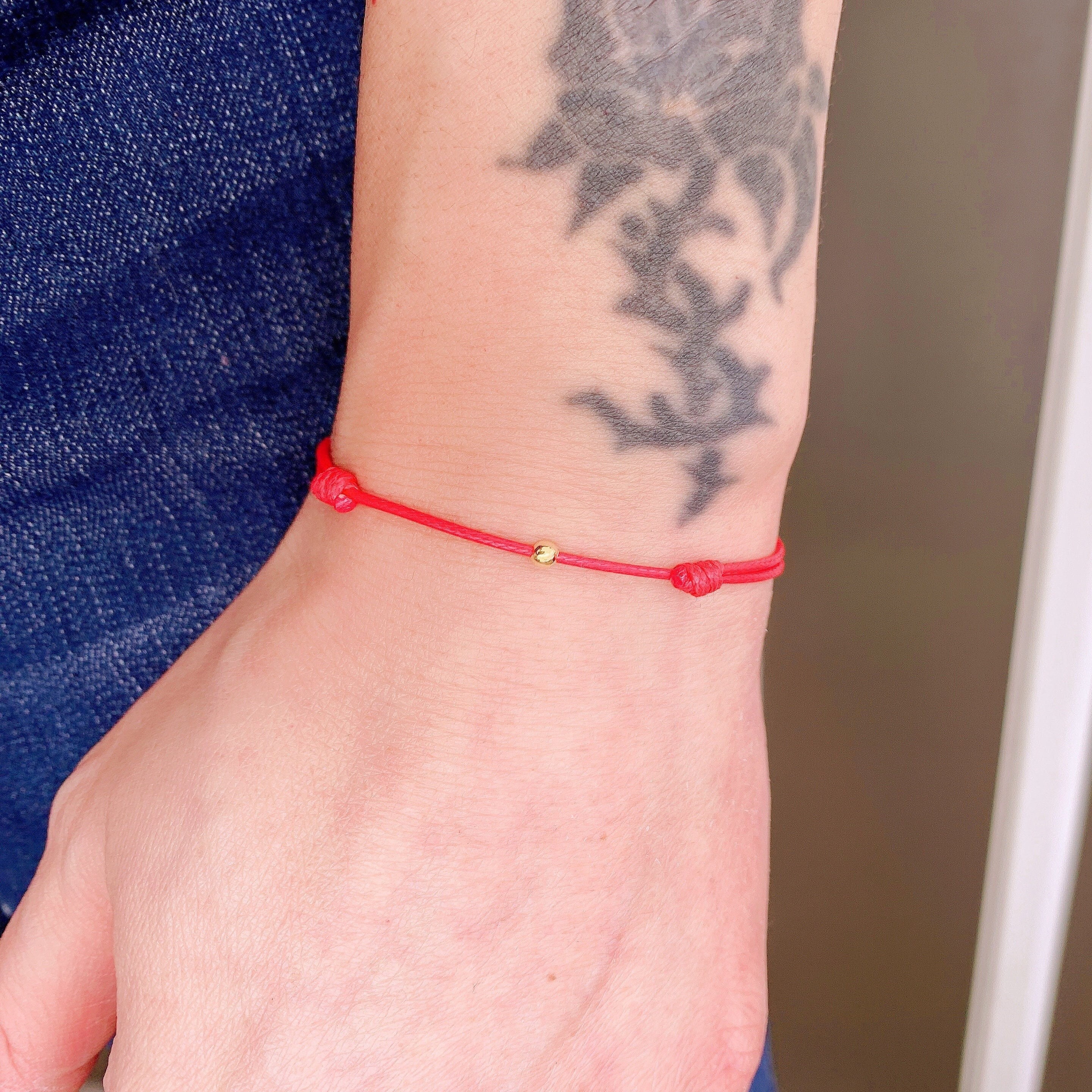
And then there's the phenomenon you can spot on any idol's wrist: the thin red string bracelet. The most famous wearer is BTS's V (Taehyung), whose bracelet became a fan obsession — everyone had a different theory. Some called it pure fashion; most fans read it as folklore, because in East Asian tradition the red string of fate binds destined people together, and red itself is believed to ward off evil energy and the evil eye — a shield against the crushing pressure of fame. Asked about it by journalists, Taehyung only smiled mysteriously and gave no direct answer. For fans, that smile was the answer.
The black onyx ring phenomenon
The quieter twin of that trend: heavy black-stone rings — black onyx or similar energy stones — appearing on idols who never wore anything like Korea's usual soft fashion aesthetic. In Asian gemstone folklore, black onyx is known as the strongest absorber of negative energy, the stone that swallows dark auras. And fans have noticed a pattern that fuels endless social-media theories: idols going through hard stretches — hate waves, scandals, exhaustion — suddenly start wearing the ring constantly. Psychic self-defense, hidden behind the cameras.
Where culture ends and conspiracy begins
One honest warning before you believe everything here: these practices have deep roots in real Korean folk culture. Saju, protective charms, red strings, visiting fortune tellers — they're familiar, mainstream touchpoints for many Koreans, long predating K-pop. That doesn't mean every Korean believes or practices them, and it doesn't make the conspiracy versions true. The fair verdict looks like this: documented fact (Lisa's name change and polygraph moment, the group lores of Billlie, Dreamcatcher and PIXY, the engineered SM names, Hyunseung's exit and Jun-hyung's scandal), unverified rumor (YG's date consultant, the "cursed" debut delays, the BTS zodiac reading), and fan interpretation (the red string, the onyx rings). The line between the three is exactly what makes this world so fascinating — and exactly what a part two is for.
You can read Lisa's full story at E! Online and Wikipedia, watch the lie detector moment at Vanity Fair, understand saju at Seoul Start, the Jun-hyung case at Wikipedia, and PIXY's lore at the PIXY Wiki. Now your verdict: are the red strings and black stones just accessories — or protection rituals? And which story here shocked you most? Say it in the comments — and if you want part two with the deeper rituals and unanswered questions, write it below.
Comments
Post a Comment