From singing behind Elvis Presley to delivering the most famous “oom-papa-oom-papa-mow-mow” in country music history, the man with the deepest voice in Nashville has said his final goodbye — and the whole genre is mourning.
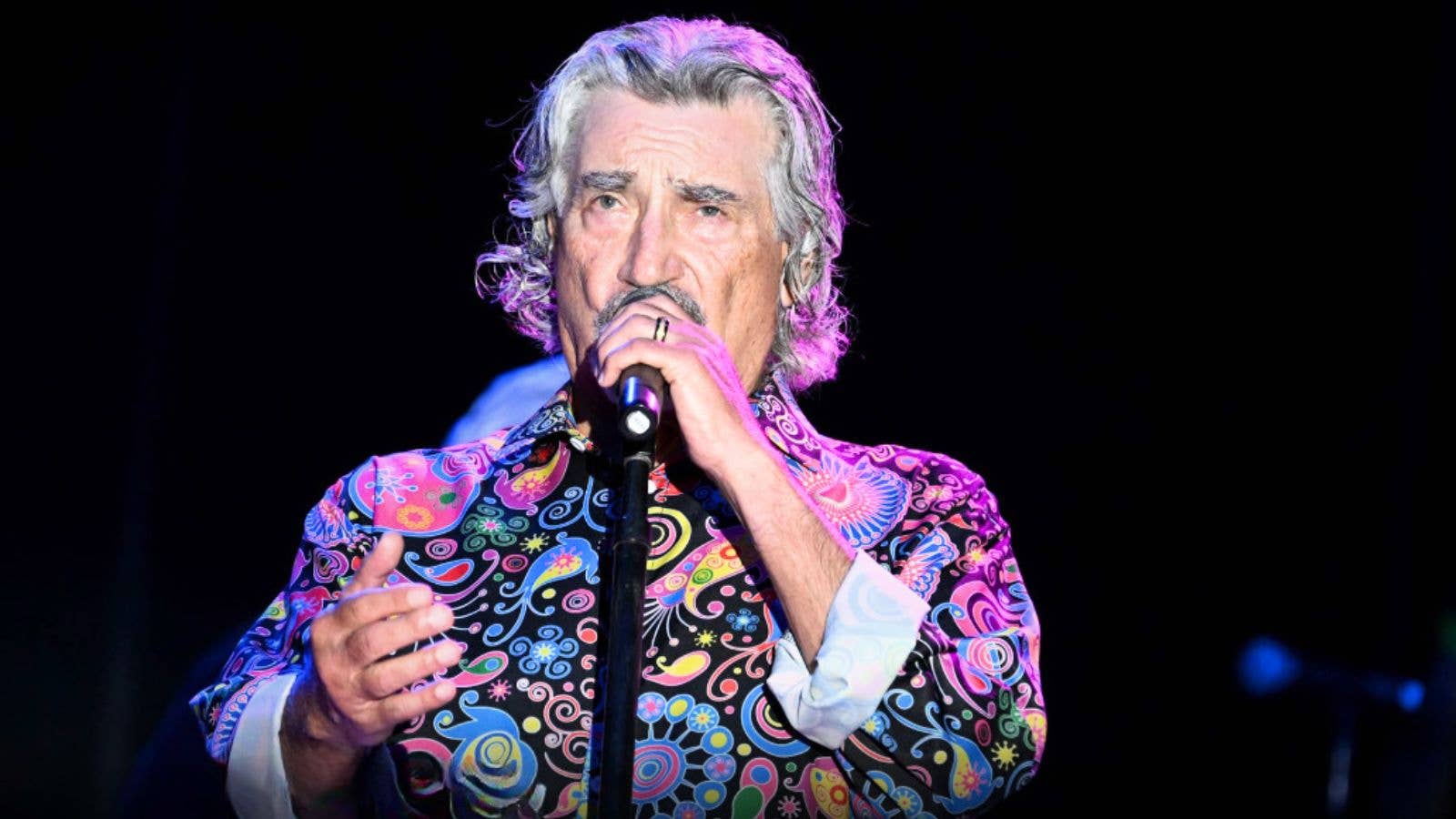
Country music has lost one of the most recognizable voices of the last five decades. Richard Sterban — the deep, booming bass of The Oak Ridge Boys and the man behind the unforgettable “oom-papa-oom-papa-mow-mow” of “Elvira” — died on Saturday, November 14, 2026, in Hendersonville, Tennessee. He was 83.
His family and the band announced the news on Sunday, November 15, explaining that Sterban passed away from complications of bronchitis and pneumonia “after fighting a long, hard battle with cancer.” The beloved bass singer had revealed earlier this year that he was battling pancreatic cancer.
Within hours, “Richard Sterban” and “The Oak Ridge Boys” were trending across the United States, as millions of fans and some of the biggest names in country music flooded social media with tributes. Here is the story of the man behind the voice — and why his loss is being felt far beyond Nashville.
The Voice You Know — Even If You Don’t Know His Name
Even if you have never bought a country record, you have almost certainly heard Richard Sterban. In 1981, The Oak Ridge Boys released “Elvira,” a rollicking cover of a Dallas Frazier song first recorded back in 1965 — and it exploded. The single climbed to No. 1 on the country chart, crossed over to No. 5 on the pop chart, sold more than two million copies, and won the Grammy Award for Best Country Performance by a Duo or Group with Vocal. Both the Country Music Association and the Academy of Country Music named it Single of the Year.
But what made “Elvira” immortal was that bass line. Sterban’s thundering “oom-papa-oom-papa-mow-mow” became one of the most imitated moments in American music — generations of fans have tried to hit it in cars, showers and karaoke bars, and very few have ever managed it. It is the rare bass part that audiences wait for, cheer for, and sing straight back at the stage. Decades later, it remains the song The Oak Ridge Boys are always asked to sing — the moment those first notes hit, entire arenas turn into one giant sing-along.
And he was far more than a one-note legend. Sterban also took the lead vocal on the group’s cover of the Righteous Brothers’ “Dream On,” which sailed into the top ten — proof that the quartet’s quiet giant could carry a melody just as beautifully as he anchored it.
From Elvis’s Stage to the Oak Ridge Boys
Richard Anthony Sterban was born on April 24, 1943, in Camden, New Jersey, and started singing the way most gospel greats do — in Sunday school and glee club. As a young man he co-founded The Keystones, a gospel quartet based in the northeastern United States, before landing the opportunity of a lifetime: a spot with J.D. Sumner and the Stamps Quartet, the legendary group that toured with Elvis Presley. Sterban sang behind the King himself and appeared in the 1972 concert film “Elvis on Tour.”
Then, in late 1972, he made the decision that defined his life. He walked away from the biggest star on the planet to join a young country-gospel outfit called The Oak Ridge Boys, alongside lead singer Duane Allen, baritone William Lee Golden and tenor Joe Bonsall. Plenty of people thought he was crazy. He told that story — and many more — in his 2012 memoir, “From Elvis to Elvira: My Life on Stage,” written with Steven Robinson. The same voice that once backed Elvis on tour was about to become a legend in its own right.
It turned out to be one of the smartest bets in country music history.
Four Voices, One Sound: The Golden Years
The Oak Ridge Boys had actually been around, in one form or another, since 1943 — but with Sterban’s floor-shaking bass locking down the bottom end, the quartet became a juggernaut. Tenor, lead, baritone and bass blended into one of the most beloved sounds in American music, and the hits kept coming: “Bobbie Sue” in 1982, “American Made” in 1983, “Dream On,” “Gonna Take a Lot of River,” “No Matter How High.”
The numbers tell the story. With Sterban in the lineup, The Oak Ridge Boys placed 34 singles in the country Top 10 — 17 of them reaching No. 1 — landed 47 entries on Billboard’s Hot Country Songs chart, and sold more than 41 million records. The group collected five Grammy Awards and earned places in the Grand Ole Opry, the Gospel Music Hall of Fame and, in 2015, the Country Music Hall of Fame. Along the way they were first featured by Johnny Cash and became the first country group to perform in the Soviet Union.
Offstage, Sterban lived large in quieter ways. He was a part owner of the Nashville Sounds minor-league baseball team for 30 years, and for years listeners on Sirius satellite radio knew him as a warm, familiar voice on the Classic Country channel — a man who loved this music as much as he sang it. Few acts in any genre can claim that kind of staying power: four men, four voices, one unmistakable sound, kept alive for more than half a century of touring.
| Quick Facts | Details |
|---|---|
| Full name | Richard Anthony Sterban |
| Born | April 24, 1943, Camden, New Jersey, U.S. |
| Died | November 14, 2026, Hendersonville, Tennessee (age 83) |
| Joined The Oak Ridge Boys | Late 1972 |
| Signature moment | The “oom-papa-oom-papa-mow-mow” bass solo on “Elvira” (1981) |
| Career numbers | 17 No. 1 country singles with the group · 41 million+ records sold · 5 Grammy Awards |
| Hall of Fame | Country Music Hall of Fame, Class of 2015 |
| Memoir | “From Elvis to Elvira: My Life on Stage” (2012) |
A Final Chapter — and One Last “Elvira”
In May 2025, Sterban stepped away from touring for health reasons, and earlier this year he shared that he had been fighting pancreatic cancer. But before he left the road, he gave fans one last gift. In January 2026, he rejoined The Oak Ridge Boys on the stage of the Grand Ole Opry to sing “Elvira” one more time — a homecoming that stopped the show.
“Having Richard on stage with us again was one of God’s greatest blessings,” lead singer Duane Allen said afterward.
His final public appearance came just weeks before his death. On October 18, 2026, Sterban attended the Country Music Hall of Fame’s Medallion Ceremony in Nashville, photographed beside his wife, Donna — calm, elegant and still very much the gentleman of country music.
“We love to sing together, to harmonize together. It’s what our lives are all about.” — Richard Sterban
The Tributes Come Pouring In
The Sterban family asked for continued prayers in a statement released this weekend: “We appreciate all of your love, support, and prayers. Please continue to lift us up in this difficult time. We find comfort knowing that he is currently face to face with Jesus.”
The band’s own tribute captured the arc of his extraordinary journey — from Elvis Presley’s stage to the famous bass line of “Elvira” — while the official George Jones Facebook page added a note that said everything about how recently, and how gracefully, he was still living his life: “I’m heartbroken to hear of the passing of Richard Sterban. I just saw him a few weeks ago at the Country Music Hall of Fame induction ceremony.” On social media, fans have spent the day posting their own versions of the famous bass line — proof of how many households this voice quietly walked into.
The tributes from Nashville’s institutions carried special weight, too. Kyle Young, chief executive of the Country Music Hall of Fame, said: “Richard Sterban was a musical bridge builder. He used his unmistakable bass voice to connect commercial country music to its deep gospel roots.” And Sarah Trahern, chief executive of the Country Music Association, added: “Richard’s deep bass not only defined the sound of The Oak Ridge Boys, but also brought warmth, soul, and character to every performance.”
Richard Sterban is survived by his wife, Donna; five children — Lauren, Tori, Rich, Doug and Chris; eight grandchildren; and three great-grandchildren. He was preceded in death by his mother, Victoria, his brother, Joseph, and his grandson, Zachary.
What Happens Next — and Why His Voice Will Never Fade
Funeral arrangements will be announced at a later date, the family said. The Oak Ridge Boys — continuing today with Duane Allen, William Lee Golden and tenor Ben James, who stepped in after Joe Bonsall’s passing in 2024 — have not yet said how they will move forward without the voice that held the floor for more than 50 years.
But here is the thing about a great bass singer: you do not have to see him to hear him. Decades from now, at weddings and ballgames and karaoke nights, some crowd will hit the chorus of “Elvira,” someone will drop an octave and go “oom-papa-oom-papa-mow-mow,” and Richard Sterban will be right there — loud, low and impossible to forget. And when the story of country music’s greatest groups is told, these four voices — tenor, lead, baritone and that inimitable bass — will always be told as one.
Rest easy, Richard. Thank you for the harmony.
Your turn: where were you the first time you heard “Elvira”? Share your favorite Oak Ridge Boys memory in the comments below — and tag the friend who still insists they can hit that famous low note.
Sources: the official Sterban family / Oak Ridge Boys statement (oakridgeboys.com, Nov. 15, 2026); The New York Times; People; Deadline; Billboard; MusicRow; Wikipedia. Reported Nov. 15, 2026.
Comments
Post a Comment